“Holding On to Home is both indictment and inspiration: a powerful challenge to how we think about immigration, gentrification, and schools, and an unforgettable testament to immigrant mothers who refuse to surrender their right to belong.”
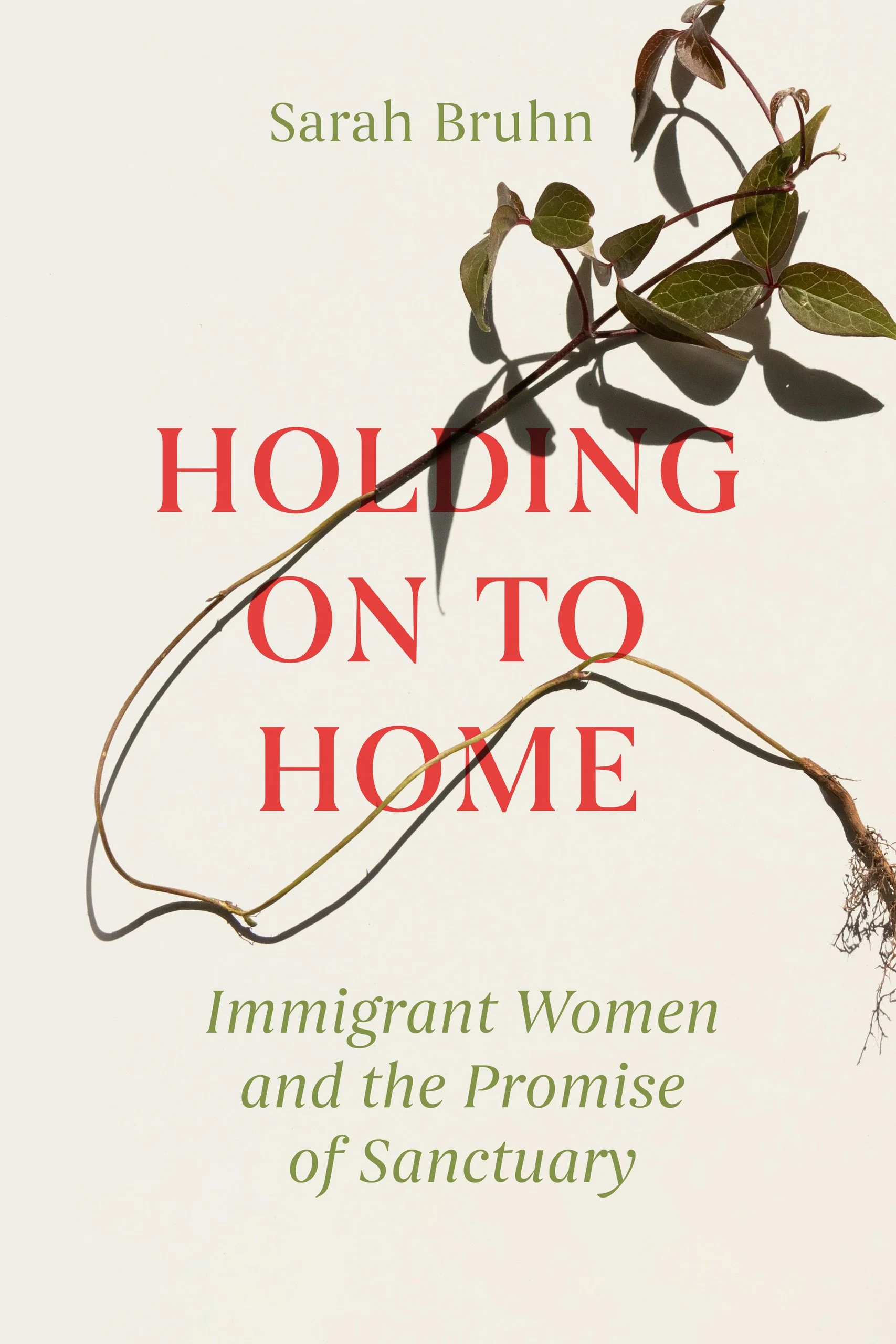
Over twenty million Americans live in cities that have passed sanctuary policies to protect the rights of immigrants and their families. However, contentious public conversations surrounding sanctuary obscure what these policies actually mean to the immigrants they purport to serve, making it hard to see what strengthens the power of sanctuary and what undermines its protections.
Holding On to Home, based on five years of fieldwork and over one hundred in-depth interviews, illuminates how immigrant women’s care work—in their families, schools, and communities—makes real the promise of sanctuary. Through their resistive care work, immigrant women weave together an enduring fabric of protection that transforms inclusive policies into meaningful practices that support immigrant mothers as they nurture their children and loved ones. Holding On to Home reveals how these women confront both overt threats to sanctuary—anti-immigrant policies and increasingly violent and arbitrary immigration enforcement—alongside a less obvious threat to sanctuary, but one that widens inequality in our urban landscapes: gentrification. Tracing the meaning of sanctuary across shifting political contexts, Sarah Bruhn powerfully demonstrates how immigrant women resist these forces of exclusion to lay claim to their right to create a home and to belong in our shared cities.
Book Tour Dates
Come join me in conversation. I look forward to meeting you.
NOVEMBER 5, 2026 - 6PM
FEBRUARY 24, 2026 - TIME TBD
Boston College
FEBRUARY 3 - TIME TBD
In conjunction with Nicole Kriesberg and the Latinx Leadership Initiative
Literati Bookstore in Ann Arbor, MI
FEBRUARY 2027 - DATE & TIME TBD
In conversation with William D. Lopez

Reviews
“Through eyes that are disciplined and discerning, attentive and insightful, and with a voice that is both analytic and artful, Sarah Bruhn offers wise witness to the caring and courageous work of immigrant women who seek to create home and find sanctuary in a rapidly gentrifying city facing the oppression and violence of federal anti-immigrant policies. Holding On to Home is a rich ethnographic portrait that captures the immigrant women’s fight for liberation and belonging, their collective advocacy and resistance, and their brave efforts to nurture their families and communities as they navigate the systemic forces of racism, sexism, xenophobia, and poverty. This timely and revelatory book is a must-read for anyone hoping to understand this moment of political, economic, and moral crisis when our cities and states have become sights of unlawful and dangerous attacks on immigrant families, women, and children.”
—Sara Lawrence-Lightfoot, Emily Hargroves Fisher Research Professor of Education, Harvard University
“Holding On to Home is a searing, intimate portrait of Latina immigrant mothers fighting to build lives in a city that both welcomes and threatens them. In the gentrifying sanctuary of “Beacon,” rents soar, condos rise, and federal immigration raids loom—yet in school offices, church basements, and crowded apartments, Latin American women, and beyond quietly weave a web of protection around one another. Drawing on five years of ethnographic fieldwork and more than 120 interviews, Sarah Bruhn shows how these mothers, family liaisons, and community workers practice what she calls “resistive carework”: everyday acts of feeding, housing, translating, and advocating that push back against deportation regimes and displacement, and make the city’s lofty promises of sanctuary real, if precarious.
“With rare clarity and compassion, Bruhn braids together the global forces that drive migration, the local politics that shape “sanctuary,” and the gendered, underpaid labor that holds everything together. She redefines sanctuary as more than a law on the books or a slogan on a city website—it is a fragile constellation of policies, relationships, and daily decisions, sustained by women whose work is too often invisible. Holding On to Home is both indictment and inspiration: a powerful challenge to how we think about immigration, gentrification, and schools, and an unforgettable testament to immigrant mothers who refuse to surrender their right to belong.”
—Gabrielle Oliveira, Jorge Paulo Lemann Associate Professor of Education and of Brazil Studies, Harvard University